Source: Old Book Illustrations
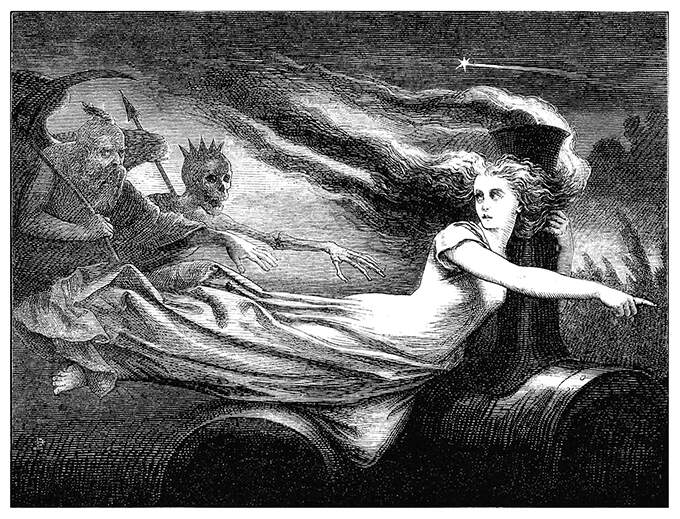
A ghostly female figure floats in the night, one arm wrapped around the chimney of a locomotive, as she points forward and leads the way for the figures of Time and Death following in her wake.
A ghostly female figure floats in the night, one arm wrapped around the chimney of a locomotive, as she points forward and leads the way for the figures of Time and Death following in her wake.



According to Piper Laurie, she honestly thought her character in Carrie (1976) was too over the top fanatical to be taken seriously. Director Brian De Palma had to take her to the side and personally tell her it was a horror film and not a “black comedy” as she thought it was. Even so, she would constantly burst out into laughter between takes because not only was her characterization and wardrobe laughable in her eyes, but the dialogue itself was humorous for her. To this day, she still refers to and maintains the movie as a black comedy.

More behind-the-scenes facts at IMDb Trivia: Carrie (1976).
Happy Easter, boys and ghouls!

“Propped, or you might say sitting, on the edge of the bed was — nothing in the round world but a scarecrow! A scarecrow out of the garden, of course, dumped into the deserted room . . . Yes; but here amusement ceased. Have scarecrows bare bony feet? Do their heads loll on to their shoulders? Have they iron collars and links of chain about their necks? Can they get up and move, if never so stiffly, across a floor, with wagging head and arms close at their sides? and shiver?”
– “Rats” by M.R. James, first published in The Collected Ghost Stories of MR James (1931), from Hypnogoria: Chained Ghosts
I started working with a friend to help encourage me to write because, although I love writing, I was getting stalled by plots with weak endings and not making my writing a priority. In one of our discussions when we were reviewing each other’s work, she asked me about mine, “What makes your story horror?”
My only answer was, “There’s murder in it and a killer who creates suspense and fear.” Not the strongest answer. So, after our meeting, I did some research to see if I could find a resource to help me better define what could make my story a horror story.
I stumbled upon a great webpage, Secrets of the Horror Genre. In most other resources I could find online, the information was vague and did not add anything to what I already knew about the genre. This webpage, in contrast, precisely outlines what is expected from a horror story, and it provides alternatives so that you can pick and choose what type of horror story you want to write. I highly recommend it if you are looking for some direction in your horror writing.


