Category: literary

  • You’re F*cked – Happy All Saints’ Day!

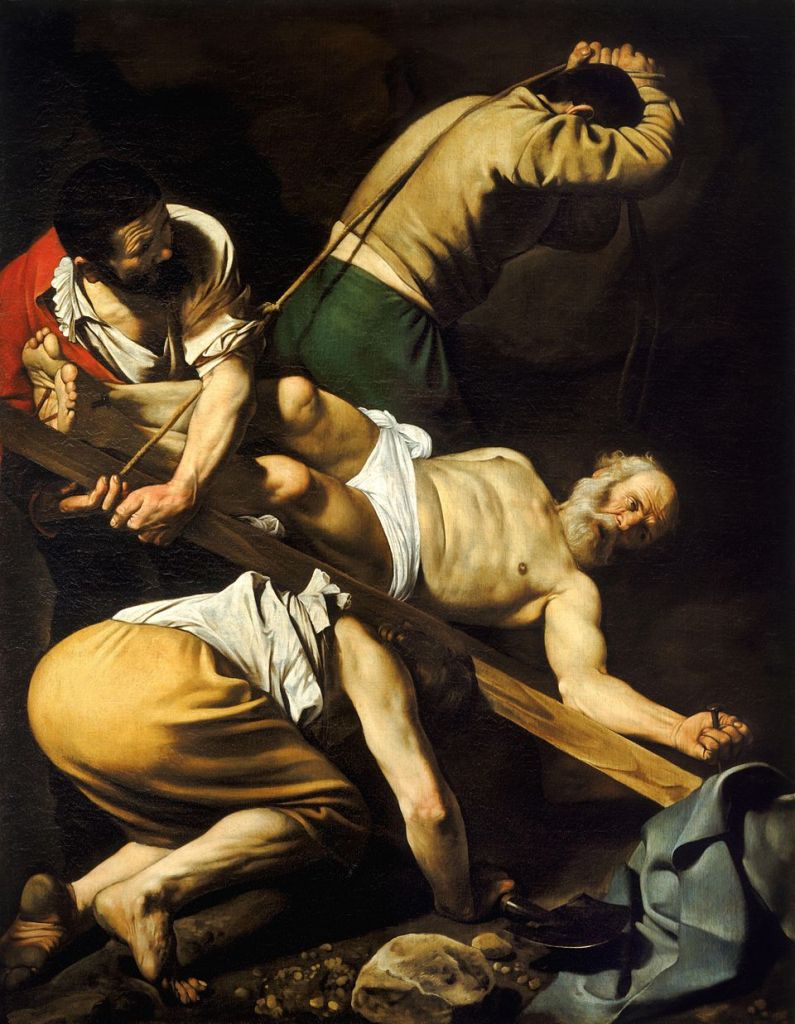
    Probably one of the most famous martyrs is Saint Peter. Born in Judaea in AD 1, Peter was the first pope and was one of the 12 apostles of Jesus.

    Peter was sentenced to death by the Roman emperor Nero, famous for his ruthless and brutal treatment of Christians. In the year 64, the Great Fire of Rome started in the Circus Maximus arena. It burned for nearly a week and by the time it was put out, it had torn through 10 of Rome’s 14 districts. Nero blamed Christians for the fire, and Peter was one of the main scapegoats.

    Famously, Peter asked to be crucified upside-down, as he didn’t believe anyone was worthy to be killed the same way as Jesus Christ. According to the apocryphal Acts of Peter, Peter said, ‘I beseech you the executioners, crucify me thus, with the head downward and not otherwise.’

    Many believe that Peter is buried in the crypt underneath St Peter’s Basilica in Rome, but this has not been conclusively proven.

    Read about more torturous saints’ deaths at www.history.co.uk.
    , , ,
  • Desdemona

    DESDEMONA
    O, banish me, my lord, but kill me not!

    OTHELLO
    Down, strumpet!

    DESDEMONA
    Kill me to-morrow: let me live to-night!

    OTHELLO
    Nay, if you strive–

    DESDEMONA
    But half an hour!

    OTHELLO
    Being done, there is no pause.

    DESDEMONA
    But while I say one prayer!

    OTHELLO
    It is too late.

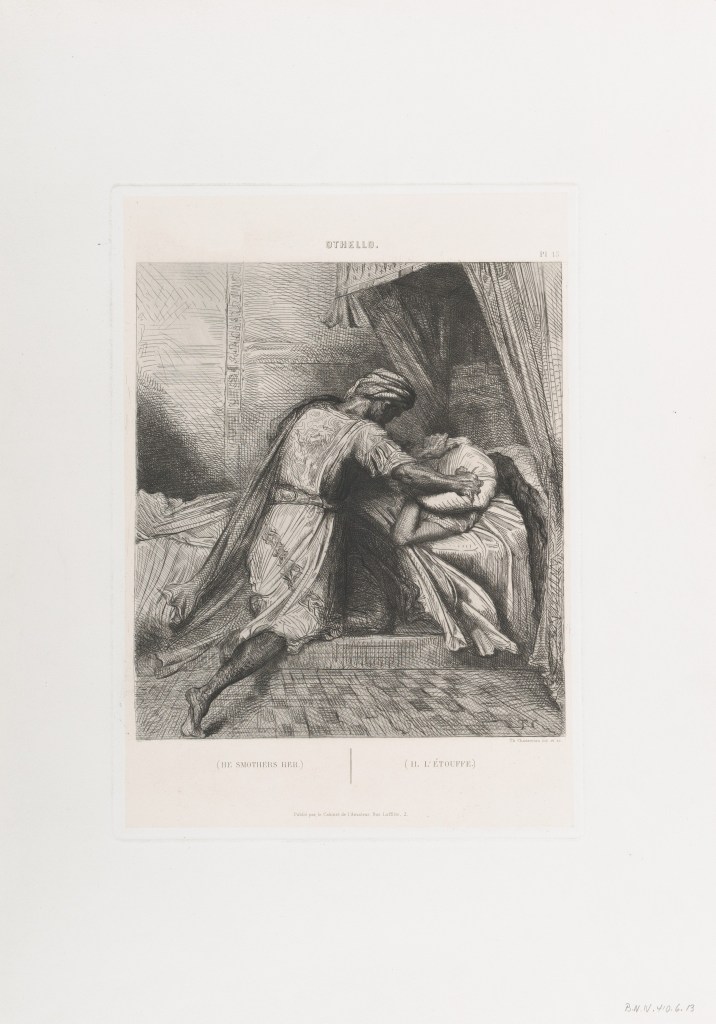
    Théodore Chassériau, “He smothers her”: plate 13 from Othello (Act 5, Scene 2), etched 1844, reprinted 1900
    French, http://www.metmuseum.org/Collections/search-the-collections/371339

    Shakespeare, Othello, Act V, Scene ii, 1622.

    , , ,
  • Horror Cinema: Appendage

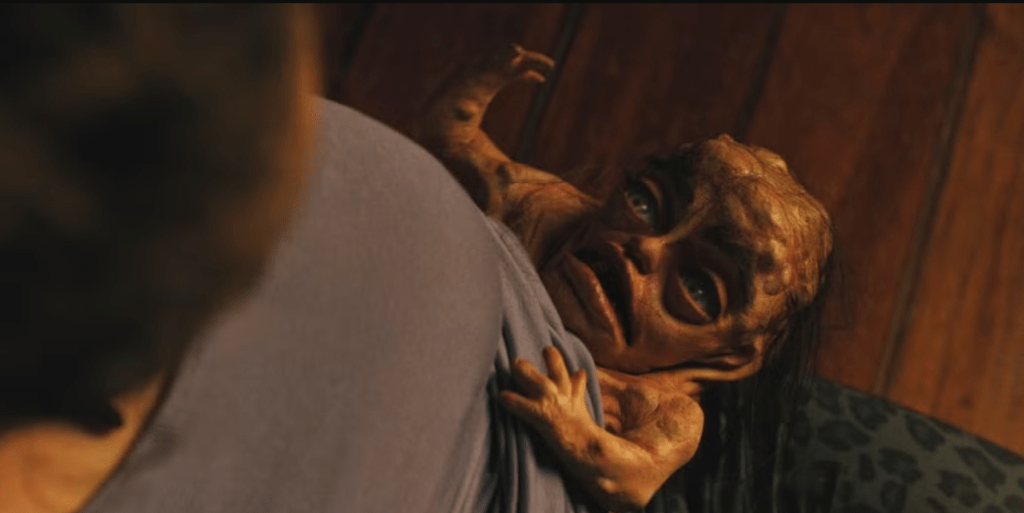
    I went into Appendage with an open mind, and I think that is the only way you can approach this movie. The strength of the movie was the main character, and her personal journey was enough to keep me watching from the get-go.

    I am a fan of magical realism, notably writers Jeanette Winterson and Gabriel García Márquez, and Appendage was a creative contribution to the film genre, something we rarely see. The only other film classic I know of is Like Water for Chocolate, which is based on an equally amazing magical realism novel.

    Appendage did a great job of manifesting the main character’s insecurities into the villain. As the narrative unfolded, the story attempted to make sense of the magical realism, which weakened the overall movie, to me, but did not ruin it. The movie ended on a very strong note that the villain was the protagonist’s subconscious, which confused me, and I think the movie would have been stronger without the epilogue. Either commit to the narrative reason for the magical metaphor or fully lean into the magical metaphor as an allegory.

    Aside from that narrative contradiction, Appendage was really good, and I would recommend it for a movie night 🍿.

    Image from https://www.cbr.com/appendage-anna-zlokovic-interview/

    Zlokovic, Anna. Appendage, Hulu, 2023.

    , , , ,
  • Ancient Ghost Stories

    In Mesopotamia, ghost stories have been discovered as far back as 5,000 years ago.

    According to the Mesopotamians, when a person’s physical body died, it created what was known as a gidim, an imprint or image of the person at the time of their death which retained their memories and personality in ghost form.

    In the mythology of the afterlife, people believed the soul of the dead would travel to the underworld or Irkalla, an inescapable place where spirits would dwell for eternity.

    However, in some cases, it was even thought that spirits or gidim could escape and infiltrate the mortal world. Mesopotamians believed the gidim who dwelled in the mortal realm did so because they had not received a proper burial. They assumed these spirits could not find peace, so instead they would haunt family and friends.

    A Sumerian tablet depicting gods and spirits, circa 2300 BCE (public domain)

    The Epic of Gilgamesh
    When the people of ancient Mesopotamia experienced illnesses and misfortune, they believed it was caused by hauntings, or gidim. Mesopotamians regularly made offerings to the dead to placate them if they thought a gidim was responsible. A famous example of one such spirit from ancient literature is found in the Epic of Gilgamesh. In the epic story, king Gilgamesh summons his friend and war-hero Enkidu back from the dead, inviting him into the mortal world in ghost form.

    From The Collector: Ancient Ghost Stories From Around the World

    ,
  • DIY Goth Tree Ornaments

    Keep it creepy this Christmas with goth tree ornaments you can make yourself designed by Me and Annabel Lee.

    Christmas Entomology

    A Little Bird Told Me…

    It’s Christmas… Quoth the Raven

    , ,
  • Horror Cinema Trivia: Only Lovers Left Alive

    Only Lovers Left Alive is a dreamy tale about vampires that, interestingly, never uses the word “vampire” in the movie. I really enjoyed how this story made me reflect on the passing of time and the feeling of being connected to the past. I liked this tidbit about the movie related to British literature:

    Christopher “Kit” Marlowe (Sir John Hurt) mentions writing Hamlet, and ghostwriting for William Shakespeare to have an outlet for his work. The real Marlowe died under mysterious circumstances at the age of 29, a few weeks before the publication of Shakespeare’s first known play. The Marloweian theory, which is considered fringe by a vast majority of scholars, suggests that he faked his death, and adopted the nom de plume “William Shakespeare.”

    I loved the mix of moodiness and drama in this story.

    Source: IMDb Trivia: Only Lovers Left Alive (2013)

    Jarmusch, Jim. Only Lovers Left Alive, Soda Pictures, 2014.

    , , ,
  • A Medieval Good Death

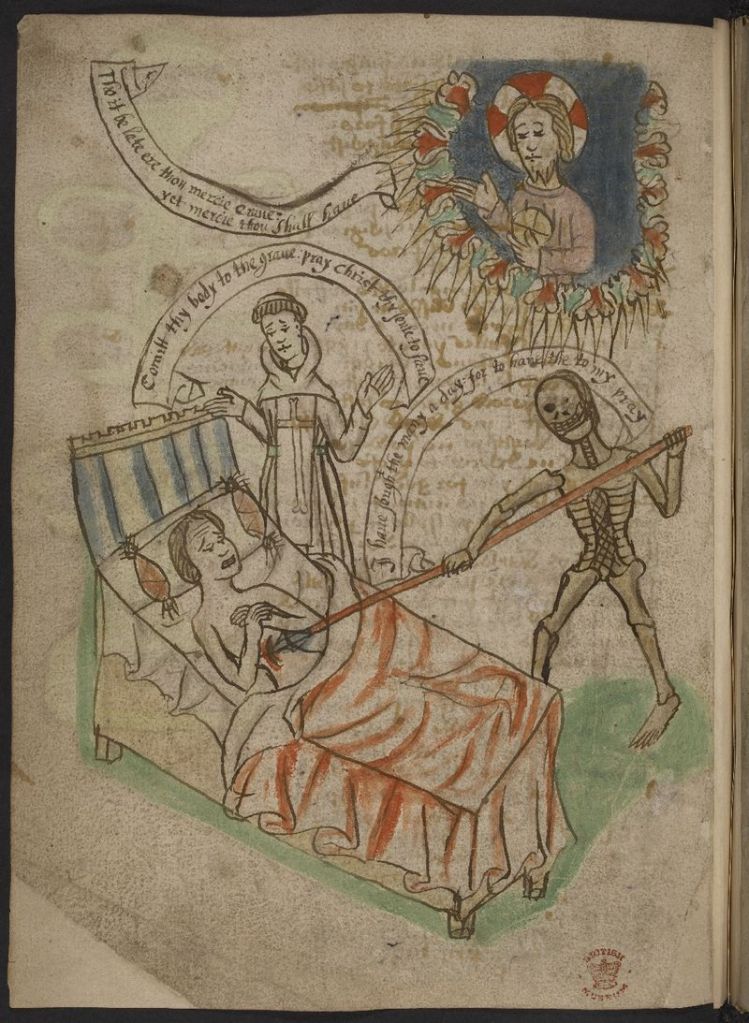
    An illustration of a medieval “good death.” A man in bed is struck by the figure of Death, while a monk at his side urges him to “pray Christ thy soule to save,” and Christ promises “mercie thou shall have.” The Carthusian Miscellany, England (Yorkshire or Lincolnshire), 1460-1500

    From Medieval Manuscripts Blog – Byland Abbey Ghost Stories: A Guide to Medieval Ghosts

    , ,
  • Rebel

    by Gustave Doré, 1866
    (https://commons.wikimedia.org/wiki/File:Paradise_Lost_37.jpg)

    Satan, now in prospect of Eden, and nigh the place where he must now attempt the bold enterprise which he undertook alone against God and Man, falls into many doubts with himself, and many passions, fear, envy, and despair; but at length confirms himself in evil, journeys on to Paradise whose outward prospect and situation is described; overleaps the bounds; sits in the shape of a cormorant on the tree of life, as highest in the garden, to look about him. The garden described; Satan’s first sight of Adam and Eve; his wonder at their excellent form and happy state, but with resolution to work their fall; overhears their discourse, thence gathers that the tree of knowledge was forbidden them to eat of, under penalty of death; and thereon intends to found his temptation by seducing them to transgress: then leaves them a while to know further of their state by some other means.” – Book IV, Paradise Lost, John Milton, 1674, based on text from 1817 London edition

    , ,
  • The Death of Cleopatra

    The Death of Cleopatra, by Reginald Arthur, 1892

    Give me my robe. Put on my crown. I have
    Immortal longings in me. Now no more
    The juice of Egypt’s grape shall moist this lip.

    – Cleopatra,
    Antony and Cleopatra, Act V, sc ii, 335-337,
    Shakespeare

    ,