
Category: horror
-
Horror Lit: Carrie
Book review
Stephen King’s CarrieAfter reading Gerald’s Game, I was particularly curious about Stephen King writing with a female protagonist. I liked his characterization of Jessie Burlingame, and I wondered where else in his catalogue did he write using a female protagonist? Less than a moment later, I remembered Carrie, which he had written 17 years earlier. How could I forget the iconic image of the prom queen covered in pig’s blood?
I had seen the movie many moons ago, but had not read the book. I decided to grab a copy at my local second-hand bookstore and find out for myself how King presented Carrie and her horror story.
From the moment I started it, I liked it. It is told in snippets of narrative mixed with quotations from court documents, academic essays and first-person biographies. King outlines the story from three angles: the public, shown through the documentation following the destruction of a town by a teenage girl’s telekinetic power; the friends and family surrounding the protagonist Carrie’s life, shown through anecdotes from their eyes as they go about their day creating the perfect storm for Carrie’s betrayal and revenge; and the protagonist Carrie, located at the heart of the action and torment.
I was raised in households with varying degrees of right-wing Christian religious fervor, so Carrie’s story of being raised by an ascetic, judgemental, punishing, sadist of a mother who feels justified in her cruel actions by her Christian devotion and faith is not unrealistic to me. Neither was the high school bullying. The pleasure of Carrie was in watching the protagonist take punch after punch from her inner voice, her mother and her peers, and seeing it fuel her rebellious reaction until she rained down fire on all of them.
The Carrie narrative is iconic, and King, rightly so, is an icon. The book far outweighs the movie, mostly, for me, by casting. I had to revise my image of Sissy Spacek from very early on in the book, which I was glad to do. I much preferred King’s more awkard, angst-ridden teenager who reminded me more of Rae in My Mad Fat Diary than anything close to Spacek.
I am happy to continue my exploration of King’s portrayal of female protagonists. Perhaps Dolores Clairborne next, or Misery … is that one told by the writer or the kidnapper? Off to the bookstore!

King, Stephen. Carrie. Penguin Group, 1975.
-
Horror Cinema Trivia: Ti West On the Real Haunting That Inspired ‘The Innkeepers’
From IndieWire
IndieWire: The story behind the reason you made “The Innkeepers” is almost as good (and scary) as the film itself. Can you tell it for those who aren’t familiar?
Ti West: Well the hotel that inspired the film is actually in the film. What happened was we were making my previous film The House of the Devil, and we were staying at this hotel called the Yankee Pedlar Inn because it was the best option to put the crew up. It was the cheapest and nicest place we could find and about 25 minutes from our location.
We would go and shoot this satanic horror movie nearby, but the weirder stuff would happen back at the hotel. It just started off kind of goofy, but it became this thing where most of the cast and crew started to think there was something up with the hotel.
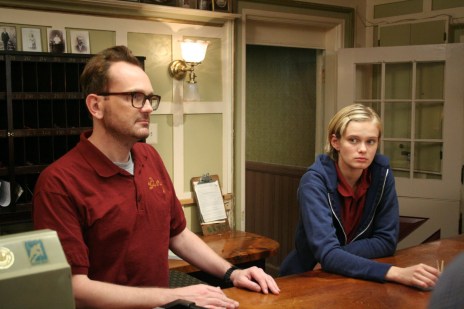
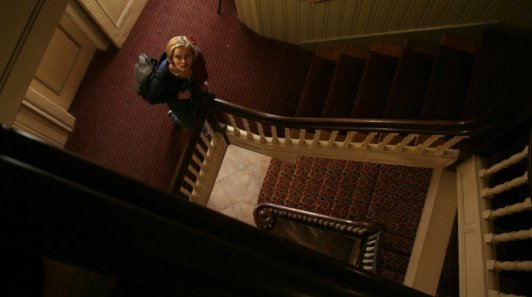
The staff at the hotel believe it’s haunted. The whole town believes it’s haunted. So it has this kind of mystique to it. But what was charming to me about it, was that it’s this mixture of a historic, perhaps haunted building and totally bad ’70s renovation. The people who work there are in their twenties…part timers. So there’s this weird lore of the place. At the same time, the place doesn’t live up to it. So I found it really charming and interesting.
I wanted to make a ghost story. I was trying to think of how to do it cheap. Then I thought, “Why not make a movie we lived?” The place let us be there before, so they were likely to let us do it again. That’s kind of how it all came to be. They let us back in and we moved very quickly.
Read the full interview at IndieWire: Ti West On the Real Haunting That Inspired ‘The Innkeepers’
-
Horror Cinema: Victor Crowley
Movie review
Adam Green’s Victor CrowleyThe most refreshing part of Victor Crowley was that it was not bogged down (pun intended) by unnecessary back story justifying the villain and his behaviour. I have really disliked the trend of director’s releasing biopocs of my favourite senseless killers, like Rob Zombie’s Halloween or the 2017 movie Leatherface. What attracts me to these villains is their senseless violence and mania, not trying to figure out why they are that way. To me, a slasher villain is a hurricane, some careless and destructive act of nature that you don’t want to cross.
Victor Crowley was, in contrast, a straight-up gore flick: another installment of a group of people who cross paths with the murdering monster Victor Crowley. While the storyline was flimsy and the characters a bit annoying, the face-smashing, decapitating and disemboweling made up for it.
This installment of the Hatchet series won’t be my favourite, but it holds a deserved place within the canon.

Green, Adam. Victor Crowley, ArieScope Pictures, 2017.
Poster image from Movieweb. -
Horror Lit: By the Pricking of My Thumbs
Book review
Agatha Christie’s By the Pricking of My ThumbsI consider Agatha Christie a horror writer because, in practically any library, you are sure to find a macabre tale of murder by her. She was the first mystery writer I discovered, and I remember the thrill of being young and being allowed to read her murder stories. She was, in fact, my first inspiration to become a writer myself. I remember plotting out complex and devious murder schemes in short stories, written by hand in flimsy composition notebooks.
While shopping for a Stephen King book recently, I found a large selection of Christie novels, and chose By the Pricking of My Thumbs for its rich title … and for being a reference to the three witches in Shakespeare’s MacBeth. Sold!
The story turned out to be quite different than I expected, but intriguing just the same. The main characters were older, so the pace of their lives and their stories were very different from mine. But, Christie made them unique and engaging, and their wandering whimsies and desires led them toward both discovering and solving a long-held mystery, which was fun. The story ended with a surprising attack of the villain on the protagonist: one old lady trying to kill another while locked in a hidden room … priceless!
My favourite narrative tool that Christie used in this book was to play with two narrators. It began with the husband and wife, and then followed the wife. About halfway through the book, the wife encountered danger, and the story followed the husband for a while. This created a tension in me that I was not expecting. At that point in the narrative, I was feeling really attached to the wife. Then finding myself in her husband’s shoes and worrying about her made me feel even more scared for her. I thought that was brilliant.

Christie, Agatha. By the Pricking of My Thumbs, Williams Collins Sons & Co Ltd, 1968.
-
Horror Junior: The Peanut Butter Solution
Movie review
Michael Rubbo’s The Peanut Butter SolutionThe Peanut Butter Solution is a Canadian, family-friendly horror classic. The story centres around a kid who lost his hair from fright after visiting a scary, abandoned house. He then gets a recipe from a ghost to grow his hair back, but this solution only leads him into the hands of a villain.
Watching The Peanut Butter Solution as a kid, I liked that it was funny, scary and bizarre. Even as an adult, I don’t think that I have ever seen anything quite like it. With a bit of an old school Degrassi feel to it, this movie is fun and worth a watch if you haven’t seen it yet.
Rubbo, Michael. The Peanut Butter Solution, Cinéma Plus (CA) / New World Pictures (US), 1985.
-
Horror Cinema: Psycho
I love discovering that a personal horror-film favourite is based on a novel:
“Psycho was the first movie adapted from a novel by Robert Bloch (1917-1994), and despite its great success, he only received $9,000 from selling the film rights to his novel. However, the movie helped his career tremendously, and he wrote for a number of films and television shows over the next three decades, most of them in the horror/thriller/suspense genre, such as The Night Walker (1964) starring Barbara Stanwyck, and Strait-Jacket (1964) with Joan Crawford.” (from Trivia & Fun Facts About PSYCHO by Turner Classic Movies)
Adding Bloch to my reading list!
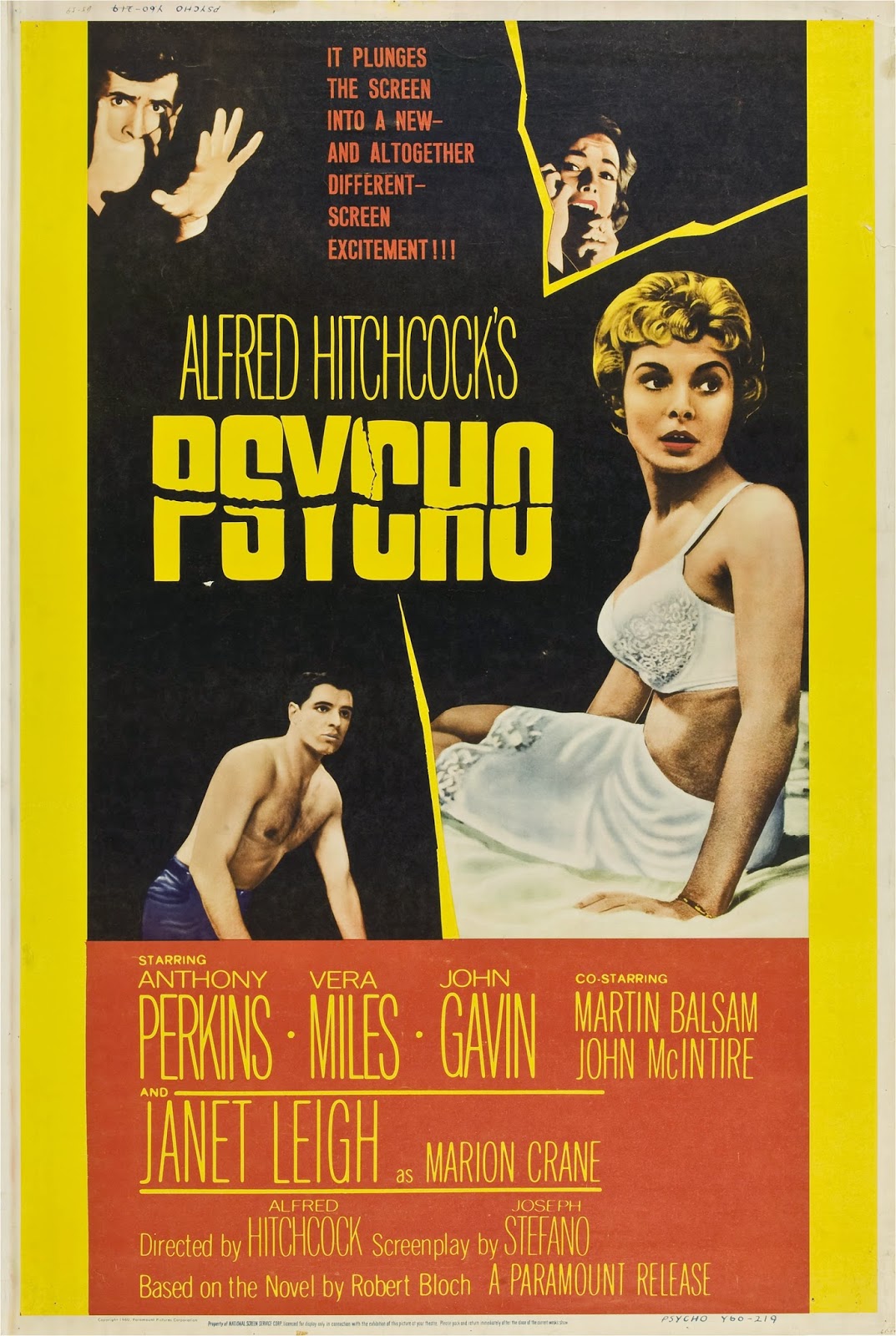
(poster from Discreet Charms & Obscure Objects: Images of rare/well-known movie posters)
-
Horror Lit: Gerald’s Game
Book review
Stephen King’s Gerald’s GameOne of the reasons why I decided to run a horror fan blog was to encourage myself to be more immersed in the horror genre, especially in horror writing. One of my favourite activities is to write horror stories, so seeing how other horror writers develop a narrative with scary moments, and where those scary moments appear, interests me.
I admit that I have not read much Stephen King, although he has been a presence in my household my whole life. Both of my parents are fans, so we always had at least one King book in a bed stand or on a shelf. The few King books I read growing up, I liked. But, I was never pulled into the excitement of exploring more into his catalogue.
There is no time like the present. King is a master at horror story-telling, so I only have much to learn from him.
On the recommendation a few months back by Satan’s Niece, who is an avid King reader, I picked up a copy of Gerald’s Game. Going into the novel, I had a basic idea of the plot, which tells the story of a woman’s ordeal after she is handcuffed to her bedpost by her husband during an excursion to their remote cabin, and he dies. I was curious to see how King could write a 400-plus page novel based on this, to me, slim premise.
Again, King is a master. As he tells the story of the main character hung up by her arms and vulnerable—facing thirst, starvation and madness—he tells the story of her psychological vulnerability, weaving in and out of her sexual, social and emotional vulnerabilities throughout her life, particularly in her adolescence.
While I enjoyed many aspects of Gerald’s Game, including the empathetic, first-person female viewpoint and the explicit visuals of body gore, I especially liked that the story was about two things: the personal life of this one person struggling to survive thirst and starvation, and the universal experience of any person having to go through such a horrific ordeal. My favourite section of the book was about two thirds in when the character was preparing to face her second night tied up to the bed. She was victim to the madness of her thirst and starvation and, here, when she was shifting between memories, dreams and reality, King shows us what dying like this would feel like. Of course, the whole time I am thinking, “What if it were me?”
Netflix has recently released a film version of Gerald’s Game. The viewer’s reviews looked positive, and I started watching it, hoping to do a review of both the book and movie. But, as the husband locked the main character to the bedpost, I realized it was “too soon.” I had just closed the book, and I couldn’t bear to relive the horror that I encountered in the book. Give me a few more weeks, at least.

King, Stephen. Gerald’s Game. Penguin Group, 1992.
 The Devil's Muse