Boris Karloff having a nice cup of tea and a piece of toast between shots of Frankenstein, released in 1931.
From Twenty-One Behind the Scenes Shots of Classic Hollywood Movies
Boris Karloff having a nice cup of tea and a piece of toast between shots of Frankenstein, released in 1931.
From Twenty-One Behind the Scenes Shots of Classic Hollywood Movies
My Mom loved Royal Doulton figurines when I was growing up, so they have a special appeal to me. You can imagine my delight when I first came upon the work of Jessica Harrison from the United Kingdom. She takes Royal Doulton figurines and revises them into gruesome ladies. Some are holding an internal organ or their entrails in their hands pulled out from their bodies. Others have chopped off limbs or are decapitated or nearly decapitated.

Visit Harrison’s online shop to see more of her work. She is selling prints of images of these pieces, so you can add one to your home.
A friend invited me out to go see the new Japanese horror film One Cut of the Dead. As soon as I watched the trailer, I knew I wanted to see it.
I highly recommend it. The movie succeeded in mixing horror with comedy in a very satisfying way. I found it original and engaging — from the spooky and dark moments to the ridiculousness of the sitcom-like antics. I left the theatre feeling charmed by the whole experience and will certainly watch it again and again.
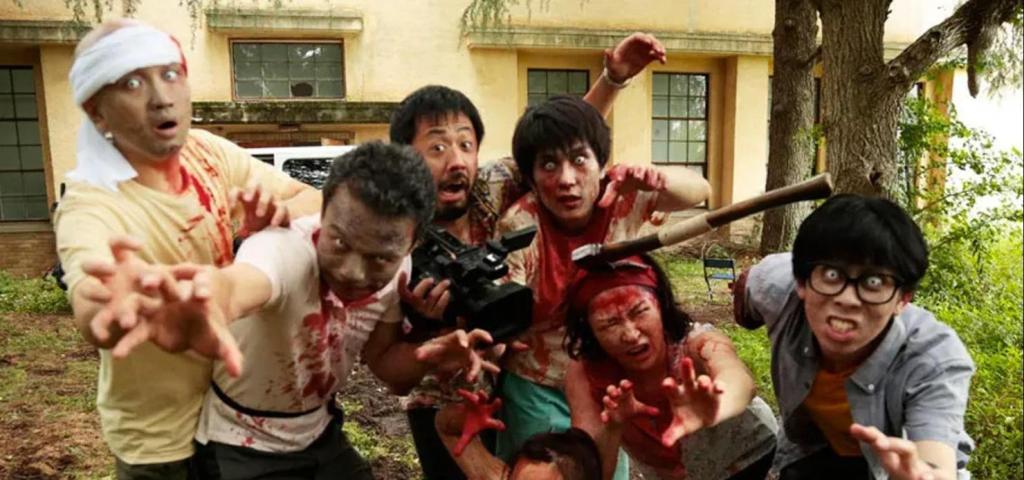
Ueda, Shin’ichirô. One Cut of the Dead, Enbu Seminar, 2017 (Japan).
“Belvelly Castle sits prominently on the shore of Great Island in Cork Harbour. It is said that in the seventeenth century Margaret Hodnett lived there. Mirrors were a status symbol with the wealthy at that time and Margaret was known for her love of these to remind her of her renowned beauty. She had an on-off relationship with a local lord called Clon Rockenby who asked for her hand in marriage many times but was refused.

“Eventually, Rockenby decided that the humiliation was enough and raised a small army and went to the castle to take her by force. He thought the Hodnetts, used to a luxurious life, would not withstand a siege.
“However, they surprised him by holding out for a full year before surrendering. When he entered the castle Rockenby was shocked to see the state of Margaret, skeletal and starved, a shadow of her former self, her beauty gone. Out of rage, Rockenby smashed her favourite mirror to pieces, as he did so one of the Hodnetts killed him with a sword.
“After these events Margaret descended into insanity, she was said to have sought out mirrors constantly to check if her beauty had returned. It never did. She died in old age at the castle. Her troubled ghost appears as a lady in white, sometimes with a veiled face and sometimes with no face at all. Those who have seen her say that she looks at a spot on the wall, then rubs it as if looking at her reflection.

“Apparently, one stone on the castle’s wall has been rubbed smooth over the years, perhaps the spot where her mirror used to hang. Belvelly has largely been unoccupied since the nineteenth century but is currently being renovated.”

Image from Instructables
“You can’t talk about creepy dolls without invoking the ‘uncanny valley,’ the unsettling place where creepy dolls, like their robot cousins, and before them, the automatons, reside. The uncanny valley refers to the idea that humans react favorably to humanoid figures until a point at which these figures become too human. At that point, the small differences between the human and the inhuman – maybe an awkward gait, an inability to use appropriate eye contact or speech patterns – become amplified to the point of discomfort, unease, disgust and terror. The idea originated with Japanese roboticist Masahiro Mori’s 1970 essay anticipating the challenges robot-makers would face. Although the title of the paper, ‘Bukimi No Tani,’ is actually more closely translated as ‘valley of eeriness,’ the word ‘uncanny’ hearkens back to a concept that psychiatrist Ernst Jentsch explored in 1906 and that Sigmund Freud described in a 1919 paper, ‘The Uncanny.’ Though the two differed in their interpretations – Freud’s was, unsurprisingly, Freudian: the uncanny recalls our repressed fears and anti-social desires – the basic idea was that the familiar is somehow rendered strange, and that discomfort is rooted in uncertainty.
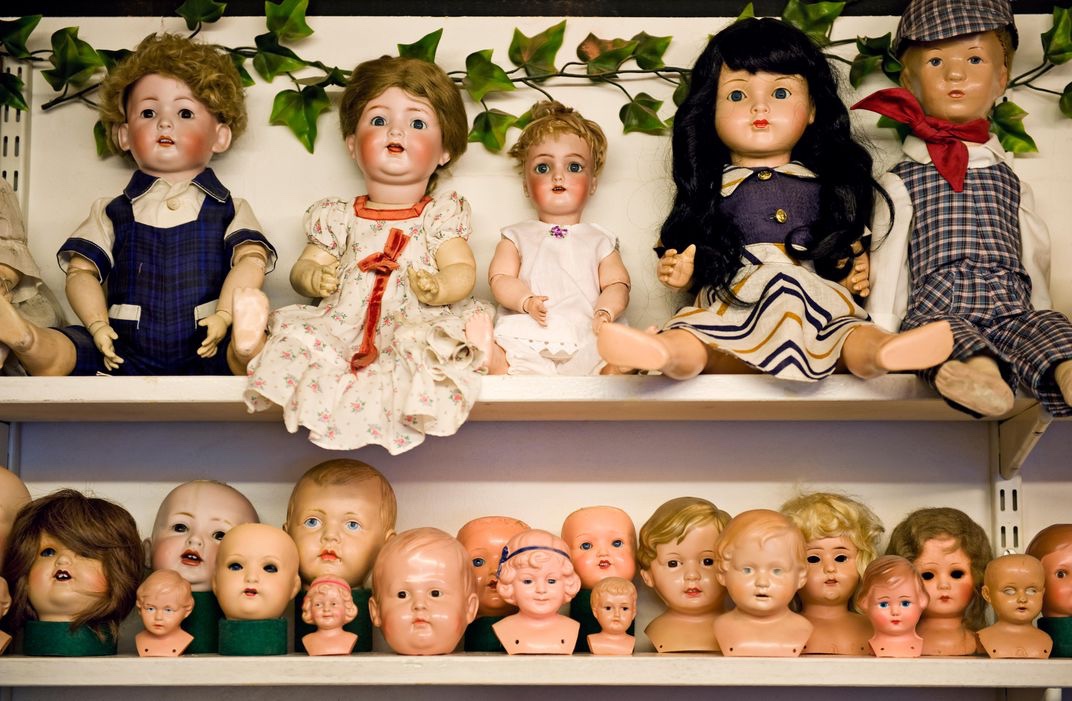
“But the uncanny valley is, for scientists and psychologists alike, a woolly area. Given the resources being poured into robotics, there has been more research into whether or not the uncanny valley is real, if it is even a valley and not a cliff, and where exactly it resides. Thus far, results are not conclusive; some studies suggest that the uncanny valley does not exist, some reinforce the notion that people are unsettled by inhuman objects that look and act too human. These studies are likely complicated by the fact that widespread exposure to more ‘natural’ looking humanoid figures is on the rise through animated films and video games. Maybe like the Supreme Court standard for obscenity, we know uncanny, creepy humanoids when we see them?
“But before the 18th and 19th centuries, dolls were not real enough to be threatening. Only when they began to look too human, did dolls start to become creepy, uncanny and psychology began investigating.
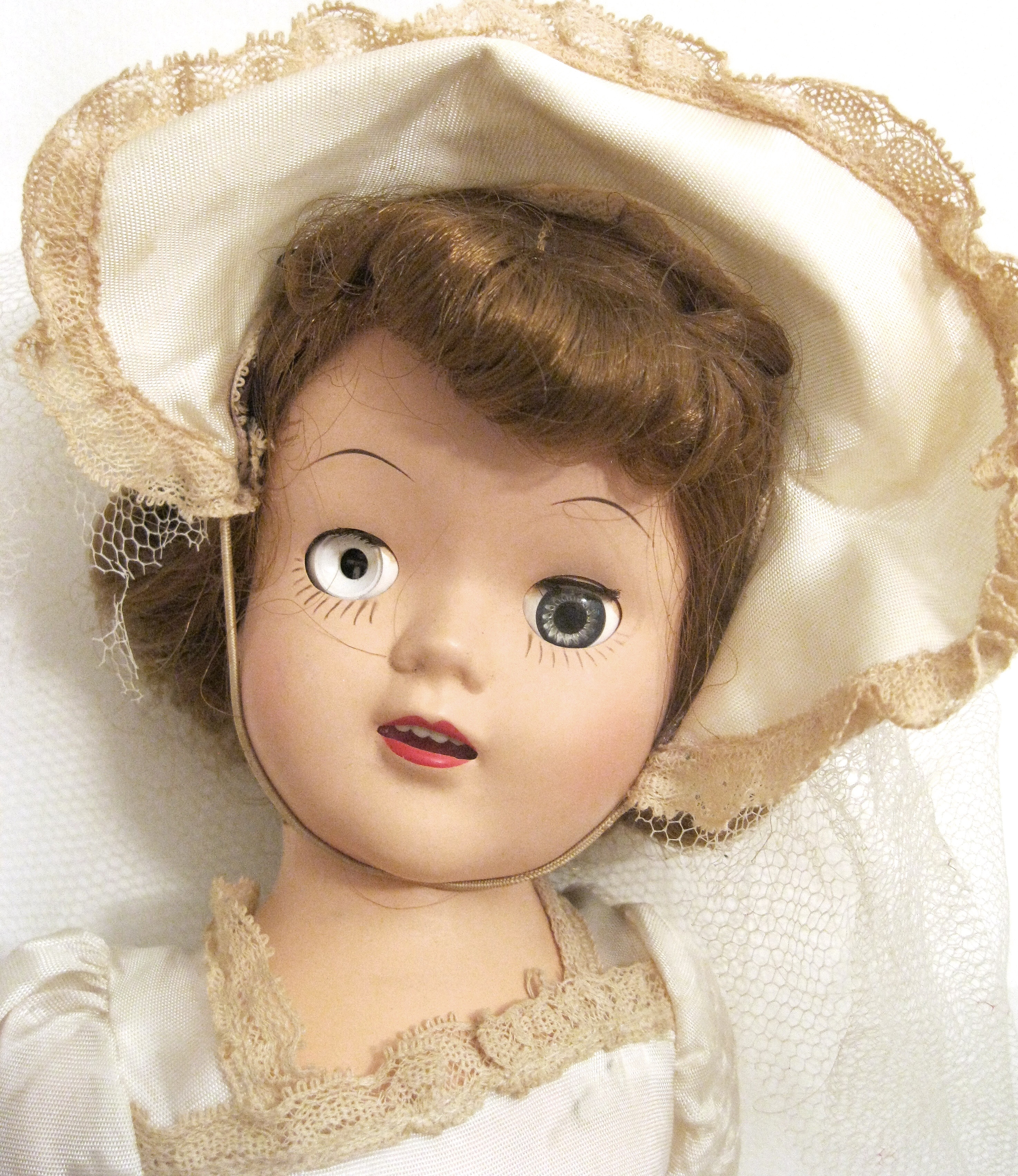
“‘Doll manufacturers figured out how to better manipulate materials to make dolls look more life-like or to develop mechanisms that make them appear to behave in ways that humans behave,’ says Hogan, pointing to the ‘sleep eye’ innovation in the early 1900s, where the doll would close her eyes when laid horizontal in exactly the way real children do not (that would be too easy for parents). ‘I think that is where the unease comes with dolls, they look like humans and in some ways move like humans and the more convincing they look or move or look like humans, the more uneasy we become.’”
From The History of Creepy Dolls by the Smithsonian Institute

“I’d read an article in the L.A. Times about a family who had escaped the Killing Fields in Cambodia and managed to get to the U.S. Things were fine, and then suddenly the young son was having very disturbing nightmares. He told his parents he was afraid that if he slept, the thing chasing him would get him, so he tried to stay awake for days at a time. When he finally fell asleep, his parents thought this crisis was over. Then they heard screams in the middle of the night. By the time they got to him, he was dead. He died in the middle of a nightmare. Here was a youngster having a vision of a horror that everyone older was denying. That became the central line of Nightmare on Elm Street.”
– Wes Craven, from Freddy Lives: An Oral History of A Nightmare on Elm Street
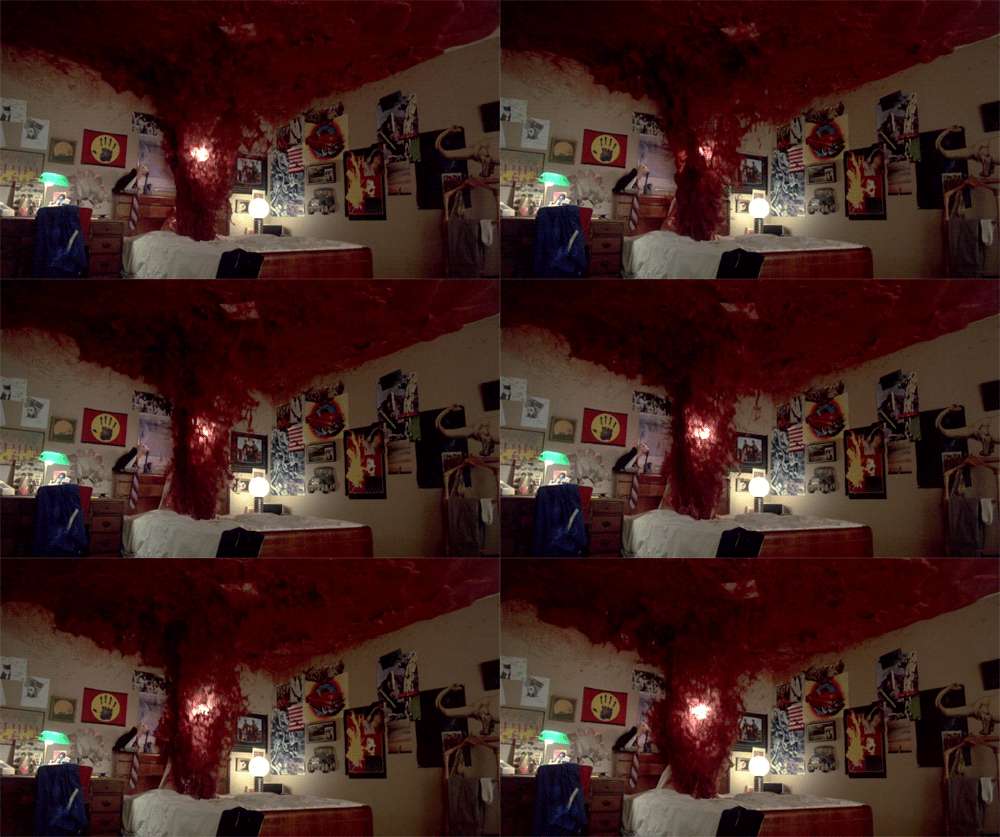
A cool behind-the-scenes image from 1988’s Child’s Play.

I have been a fan of Garbage Pail Kids since they first came out. My lunchbox was covered with Garbage Pail Kids stickers and, today, I still love finding and collecting Garbage Pail Kids memorabilia.
Mark Pingitore, who created artwork for over 100 Garbage Pail Kids card fronts as well as concept work, sketch cards, and paintings for various other trading card series, has released a new series of Garbage Pail Kids characters inspired by horror movies called Horrorible Kids. They are so much fun!
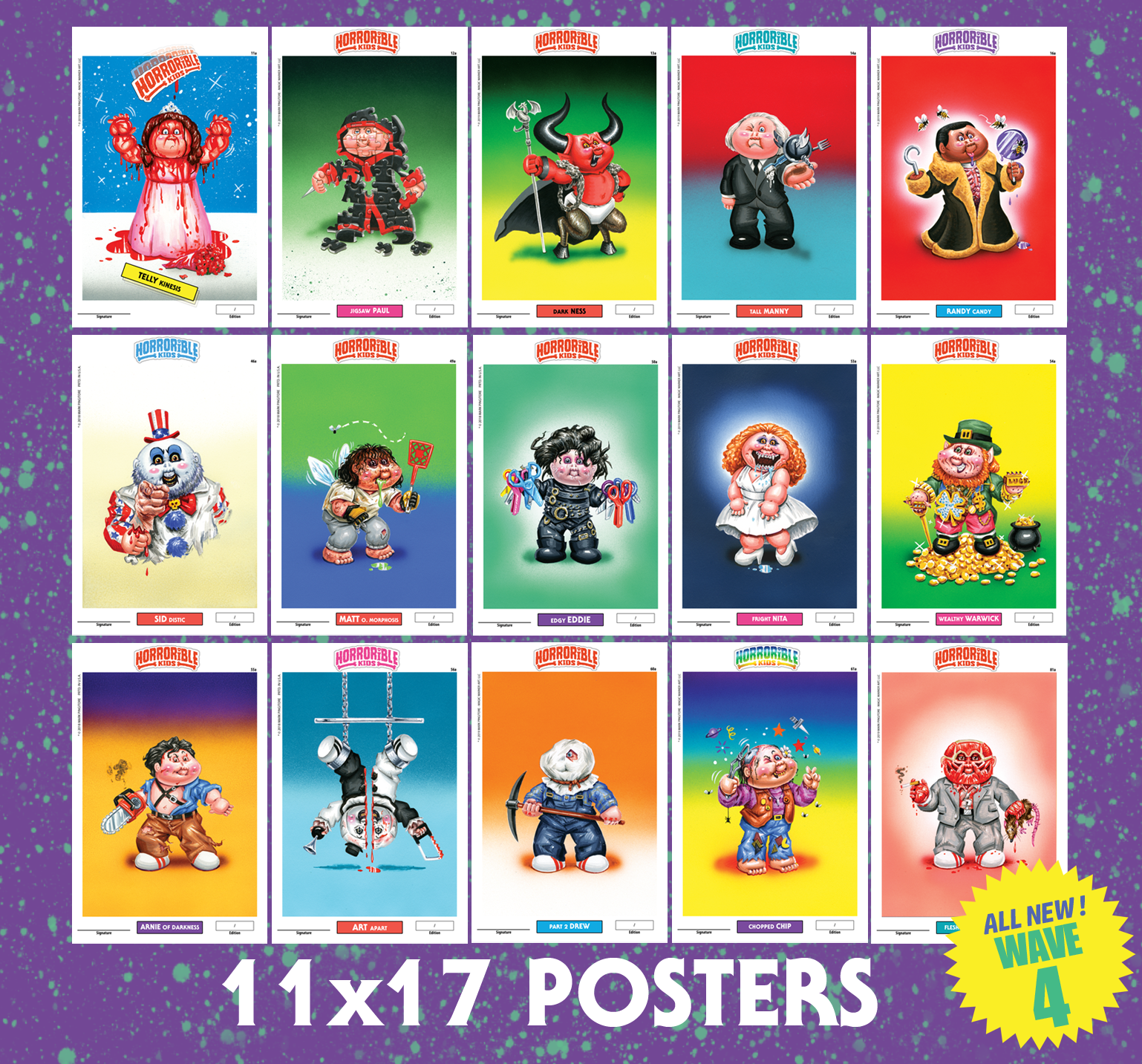
You can get cards, posters and pins from this and other series he has created at Magic Marker Art.