Category: art
-
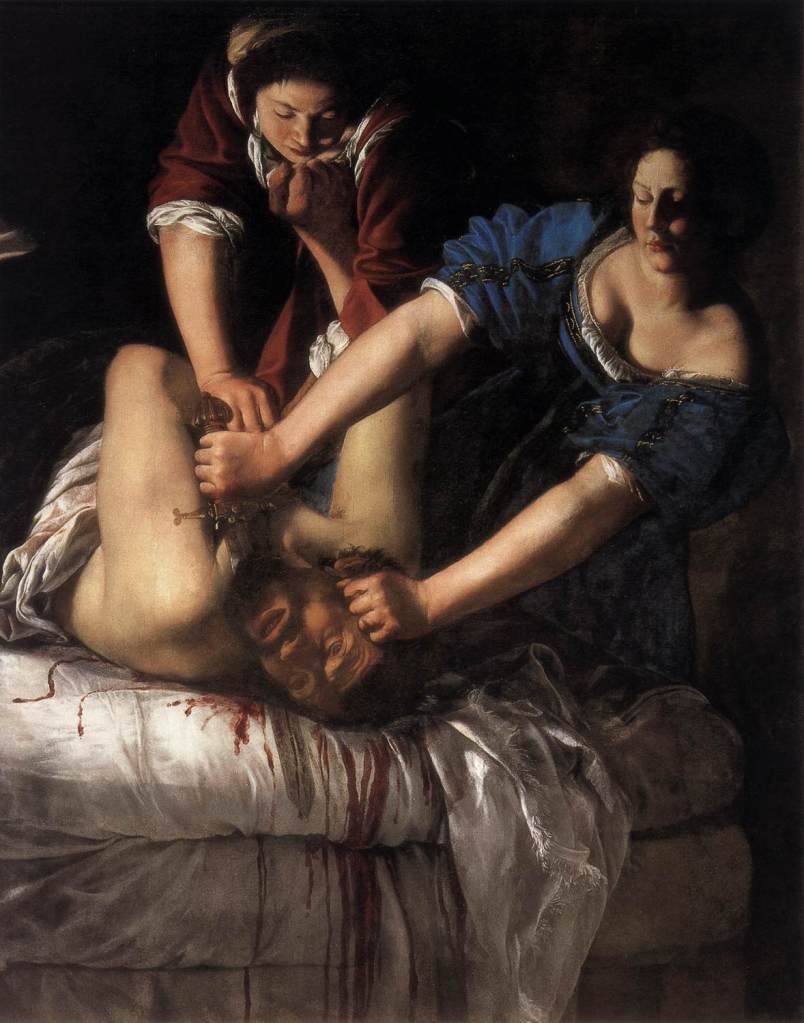
Judith Slaying Holofernes

Artemisia Gentileschi, Judith Slaying Holofernes, 1620–1621, Uffizi Gallery, Florence, Italy “The use of light and shadow plays an important role in this powerful portrayal of murder. Artemisia Gentileschi uses chiaroscuro to great effect as she depicts the moment when Judith, a widow, murders the general Holofernes, who is about to destroy the city of Bethulia.
“Many artists have depicted this particular murder on canvas, but it takes a woman to show the brutality in the most realistic way. The maid helps hold his head down however it is Judith who uses her powerful forearms to decapitate the hated general. Blood pours across the sheets and off the edge of the bed but neither woman flinches from this brutal act.
“Artemisia Gentileschi had been through a rape case herself, the details of which, unfortunately, often overshadows her work.”

From Murder on Canvas: How Artists Portrayed the Ultimate Taboo by Wendy Gray
-
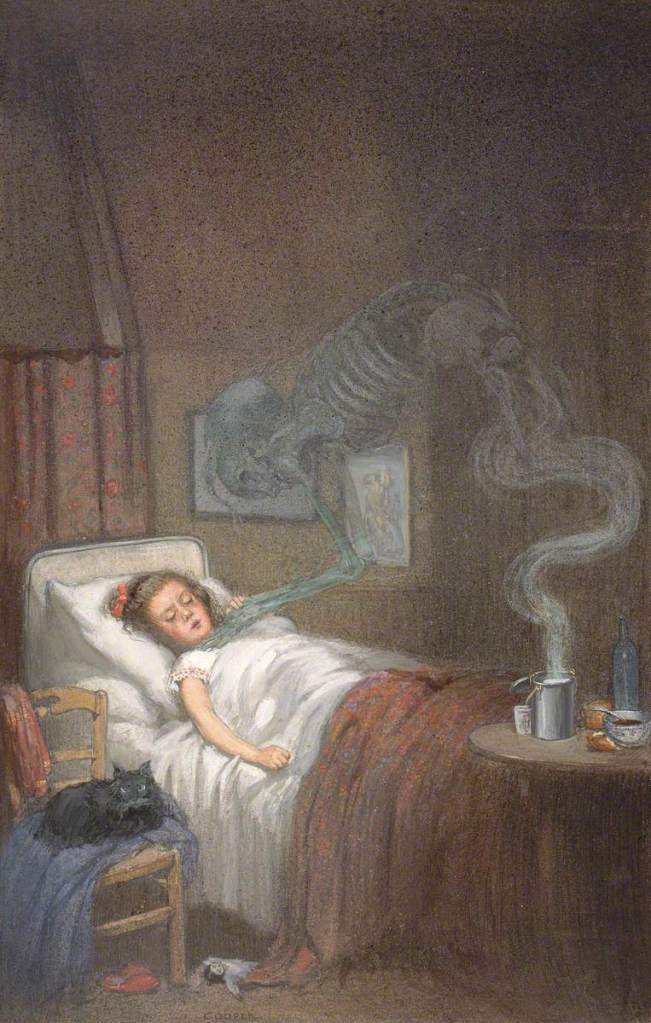
A Ghostly Skeleton

A Ghostly Skeleton Trying to Strangle a Sick Child; Representing Diphtheria, Richard Tennant Cooper, c. 1912
Wellcome Collection -
A Medieval Good Death

An illustration of a medieval “good death.” A man in bed is struck by the figure of Death, while a monk at his side urges him to “pray Christ thy soule to save,” and Christ promises “mercie thou shall have.” The Carthusian Miscellany, England (Yorkshire or Lincolnshire), 1460-1500
From Medieval Manuscripts Blog – Byland Abbey Ghost Stories: A Guide to Medieval Ghosts
-
The Dance of Death

16th Century, from wikimedia commons