Anyone else a Ti West fan? The Roost is the only film where I was scared of bats. A classic Ti West move, the film slowly builds tension until something not necessarily scary is unexpectedly terrifying. Love it.
Anyone else a Ti West fan? The Roost is the only film where I was scared of bats. A classic Ti West move, the film slowly builds tension until something not necessarily scary is unexpectedly terrifying. Love it.
Movie review
Terence Young’s Wait Until Dark
On the Bubonic Illiterate‘s recommendation, I watched Hush, a slasher flick with a disabled victim who outwits her nemesis using her disability. From the moment it started, I found it reminiscent of the 1967 film Wait Until Dark, which follows the very same premise.
Unlike Wait Until Dark, however, Hush didn’t provide with a sympathetic victim, which is, I guess, part of the tradition of modern slasher films. In Wait Until Dark, the narrative builds a relationship of exploitation between the victim and her nemesis that is caught up in her marital relationship, making her feeling of isolation and vulnerability as a blind woman greater as the movie goes on. Even though she is in the middle of the city in her home, she is still pursued as a victim in a web of lies she had no idea she lived in. So scary. And her final act of using her disability to deceive her nemesis makes you want to scream and cheer at the same time.
They don’t make movies like they used to.
Young, Terence. Wait Until Dark, Warner Bros., 1967.
Movie review
Mike Flanagan’s Hush
by the Bubonic Illiterate
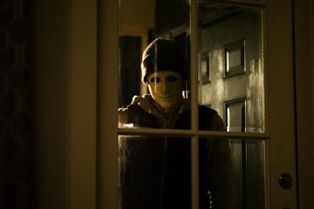
Mike Flanagan’s 2016 survival-slasher film Hush recycles a killer-at-the-door storyline by giving it an impairment. Though Hush is set against a backdrop of familiar circumstances—girl is home alone, home is a house in the woods, lunatic with unknown motive is trying to kill girl—the film’s heroine, Maddie, can’t be typecast as your typical horror lead. She’s an isolated novelist struggling to surpass her first novel, and, most refreshingly, her greatest non-clichéd quality is this: She can’t hear. And that unusual element is why and how Hush works so effectively at keeping tension taut nearly the entire film. Imagine being unable to gauge the noise you’re making when there’s a murderer on your tracks; unable to hear the patter of your feet—knowing very well that your assailant can—as you attempt to move astutely in and around your house. Hush uses deafness to turn a basic plotline into something more intimate; in lieu of suspense-building string-arrangements, moments of silence are used to depict Maddie’s reality as she struggles to stay alive.
The killer—armed with a crossbow, crowbar, and knife—is ruthless, and his slayings reflect it. As well, unlike slashers/archers in films like You’re Next, The Strangers, or Scream, the man after Maddie is indifferent to his anonymity and willingly reveals his face early into the film. The bulk of the film is a cat and mouse chase, both entertaining and unnerving. The final act, however, is particularly original: Maddie, bleeding out from a leg wound, confronts her writer brain to weigh various courses of action (endings) that she can take. Each scenario is visualized on screen, and all but one result in death. Depending on who you’re rooting for, the ending can be either satisfying or disappointing. Regardless, Hush is an original take on a well-worn genre trope and definitely not a film to keep quiet about.
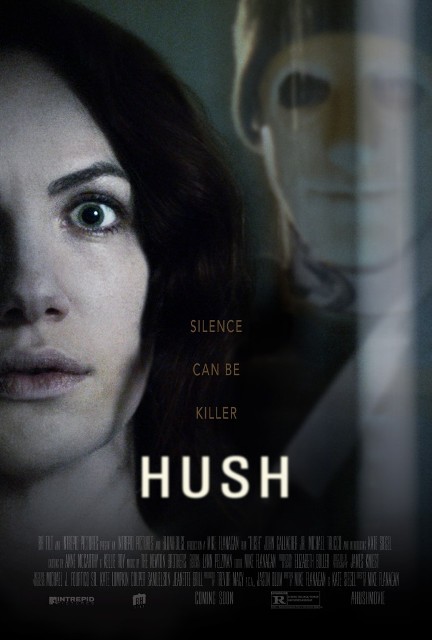
Flanagan, Mike. Hush, Blumhouse Productions / Intrepid Pictures, 2016.
I do love me a Freddy Krueger kill!
Movie review
Kim Henkel’s Texas Chainsaw Massacre: The Next Generation
 One of my all-time favourite horror movies is Texas Chainsaw Massacre: The Next Generation. I picked it up off the shelf because it starred Matthew McConaughey. I was not expecting it to be very good, but its simple storyline of lost teens in the woods combined with McConaughey’s insane character and gratuitous gore satisfied what I love in a horror movie. My favourite scene is when McConnaughey’s character sets another character on fire — it is the most insane moment! Love it!

This installment in the Texas Chainsaw Massacre franchise was the first I saw — and it sold me on consuming every other movie in the series. In general, most of the Texas Chainsaw Massacre sequels are pretty terrible. I have one other favourite in the series, but I will save that for another blog post. Nothing compares to the original.
Henkel, Kim. Texas Chainsaw Massacre: The Next Generation, Columbia Pictures/New Line Cinema, 1994.
Movie review
Adrián García Bogliano’s Late Phases
Late Phases features a blind hero who battles werewolves. Being blind, his sense of smell and hearing are heightened, like the werewolves. This makes for a really interesting take on the werewolf story. The story was well told and the werewolf attacks were appropriately gruesome.
Adrián García Bogliano. Late Phases, Dark Sky Films, 2014.
A horror cinema review of Robert Eggers’ The Witch by new contributor to the Devil’s Muse, the Bubonic Illiterate.
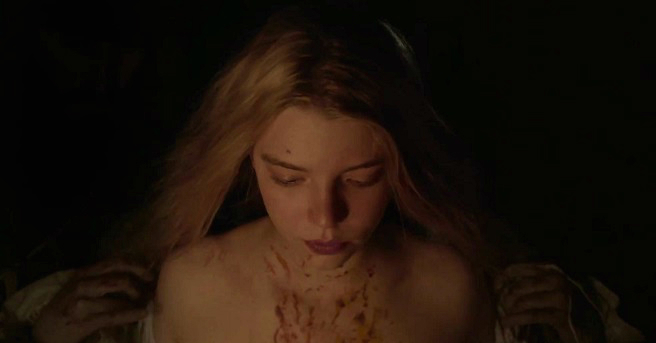 I’ve always been a fan of witches. Rhea of the Coos, the witch from Stephen King’s The Dark Tower universe, is one of my favourite fictional characters. Many of my favourite films revolve around witches, too—Suspiria, Rosemary’s Baby, even Hocus Pocus, for the matter. Yet rarely in film do we see an accurate portrayal of the true witch of folklore, the Mother Nature turned rotten, the crusty old woman of the woods who relishes in black magic and carries out Satan’s will. Robert Egger’s witch, however, is an exception.
The Witch is a true period piece. It’s evident that a hefty amount of research went into nailing not only the set and costume design but into replicating the Puritan dialect of the time. As a result of the film’s authenticity to its era, the ensuing horror is both believable and effective.
Here’s what makes The Witch frightening:
• The witch works her way at the family from various angles, and the horror increases with each new burden brought upon them: the immediate robbery of their newborn, their inability to produce bountiful crops, the possession of the family’s eldest son, the deterioration of the mother’s faith. The family crumbles.
• There is more than a menacing witch at work here; the devil is along for the whole ride. The movie is satanic, evil as all hell.
• There are some beautiful night shots of the family’s plot of land—set against a gorgeous backdrop of black woods—that will render you feeling entirely vulnerable.
• She isn’t green-skinned or cauldron-tending. She’s what you want her to be: gross.
Some of the scenes are drawn out and uneventful, and you might find yourself wondering when the real scares are coming. Additionally, some of the dialogue can be tricky to understand. While these things might deter some viewers, I found it greatly worthwhile to stick it out ‘til the film’s end; the final scene crams an abundance of evil down your throat. The camera work is chilling, and paired with the anxiety-inducing score and audio effects, the climax administers a nice dose of dread. Not only is it scary, but the final scene puts a unique spin on one character’s happy ending, which I found to be a wicked (pun totally intended) wrap-up.
She’s the witch you’ve been waiting for, and like her—ruthless and horrid—this film is the one you’ve been begging the genre to produce.
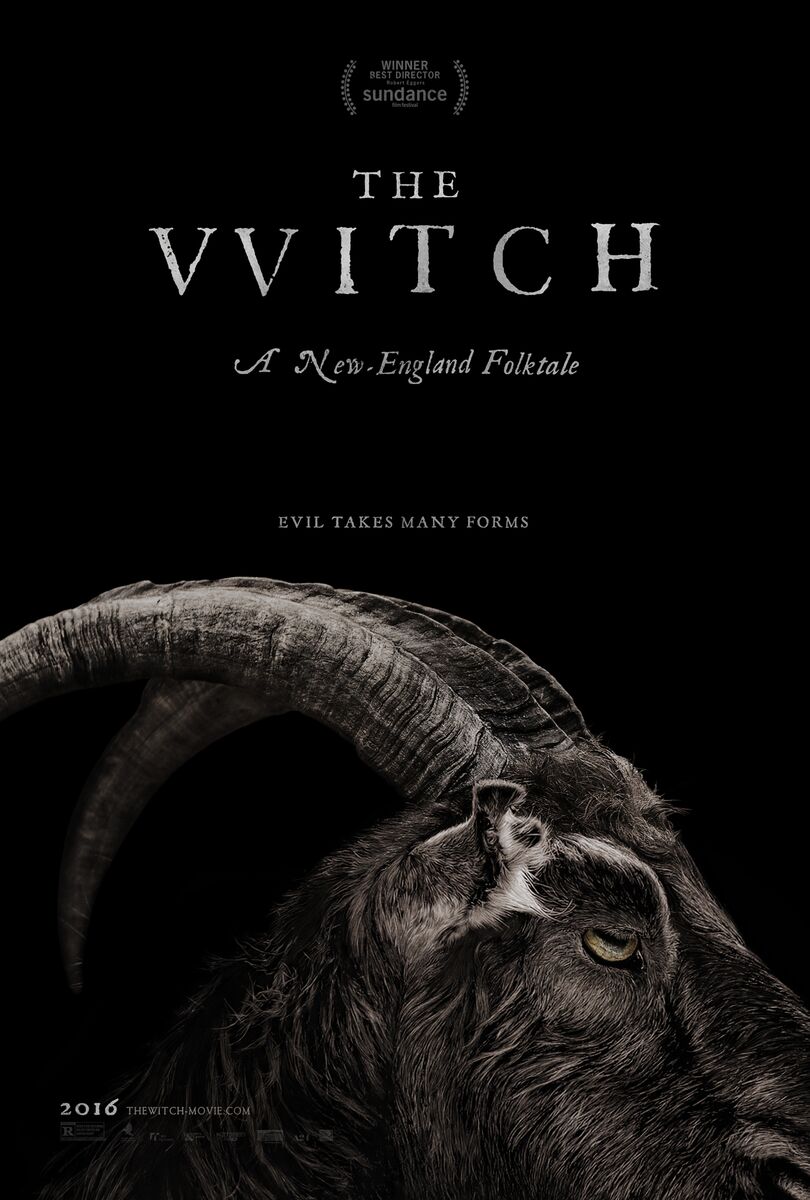
Eggers, Robert. The Witch, A24, 2015.
Movie review
Roman Polanski’s Rosemary’s Baby
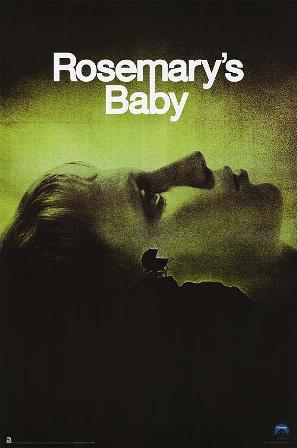
When pushed to answer what is my favourite horror movie, I reply, “Rosemary’s Baby.” I’ve watched it nearly once a year since I first saw it as a preteen.
One of the features that I particularly love about horror movies is that, sometimes, the bad guy wins. Growing up, I always wanted to read a comic or see a movie where the bad guy won in the end. It didn’t make sense to me that the hero always had to have the advantage.
After first seeing Rosemary’s Baby, I couldn’t believe what I was seeing in the final scene. It was grotesque and perfect: the Anti-Christ was born healthy and would be loved by his mother in a twisted, Satanic retelling of the immaculate conception.
My other favourite aspect of the movie is the psychological horror. Watching Rosemary unravel the secret that her neighbours are “all of them witches” and to watch her be fed to the wolves by the ones she loved and trusted most is, to me, the scariest possible thing that could happen to someone. It is also something that happens to women all the time, especially in the time that the movie was released. To me, it is an added layer of horror to watch her be treated as a possession knowing that the story is likely familiar to so many of my sisters and foremothers.

Polanski, Roman. Rosemary’s Baby, Paramount Pictures, 1968.
 The Devil's Muse