I am a big fan of Stevie Nicks, and I was curious to learn more about the background of the witch character Rhiannon from the Fleetwood Mac song. I found this informative video that filled in the blanks very well.
Category: art
-
14th-Century Exorcism

Vincent of Beauvais, Miroir Histoire (Speculum Historiale), Paris c. 1332-1335 From Discarded Images
-
Leatherface as a Japanese Mask Tattoo
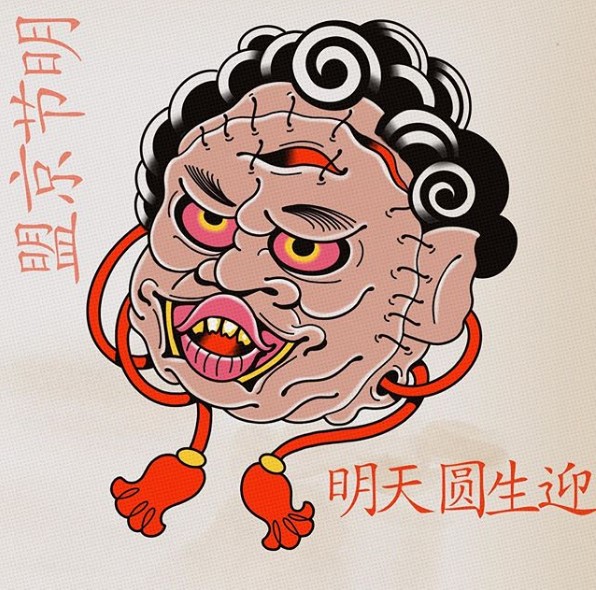
Visit OneManRiet for more awesome horror art!
-
Morbid Art

Anna Akhmatova, 1998 by Joel-Peter Witkin
-
Desdemona
DESDEMONA
O, banish me, my lord, but kill me not!
OTHELLO
Down, strumpet!
DESDEMONA
Kill me to-morrow: let me live to-night!
OTHELLO
Nay, if you strive–
DESDEMONA
But half an hour!
OTHELLO
Being done, there is no pause.
DESDEMONA
But while I say one prayer!
OTHELLO
It is too late.
Desdemona by Rodolfo Amoedo, 1892 Shakespeare, Othello, Act V, Scene ii, 1622.
-
Surrounded By Beasts
In Greek legend, sorceress Circe (pronounced Kirke) is the daughter of Helios, the sun god, and Perse, an ocean nymph. She is said to have been surrounded by beasts that could not be seen elsewhere. When others came to her palace, they saw the beasts, but only what they recognized, like lions, bears and wolves. The beasts acted as domesticated animals, showing their kindness by wagging their tails. Some say they were actually drugged victims of Circe.

The Sorceress by John William Waterhouse, c. 1911 Sources:
* Circe — Greek Mythology Link
* Britannica — Circe: Greek Mythology -
XIII Death
All that live must die, passing through nature to eternity.
– Shakespeare, from Hamlet

Medieval Scapini Tarot